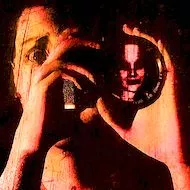
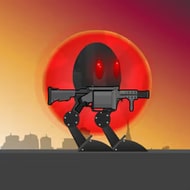
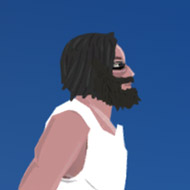
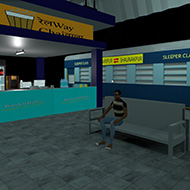
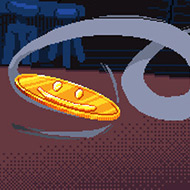
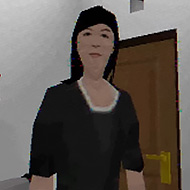
A virus has torn through this zoo, twisting keepers and animals alike into something with too many teeth and a smile that doesn’t belong on a giraffe, and you’ve been sent through the gates after dark to find out how to stop it. Zoonomaly drops you into that zoo alone, with no weapon that kills anything, only your wits and a light-based tool between you and whatever is breathing behind the enclosure fences.
Walking Into Zoonomaly’s Zoo After Dark
The map stretches from dense, murky forest paths to gutted, abandoned facilities, and Zoonomaly never funnels you down one fixed route through them. You can head toward whichever enclosure looks least guarded first, which means two players can describe wildly different opening ten minutes depending on whether they wandered into the aquatic exhibits or the primate house first. New players routinely make the mistake of treating this like a fixed corridor horror game, sprinting toward the first sound they hear instead of circling wide and listening.
That openness is also why the low-poly, oddly cheerful creature designs land harder, sitting at odds with how aggressively some of them behave once they notice you.
The Bloom O’Bang and Reading Monster Auras
Your only real defense is the Bloom O’Bang, a burst-of-light tool that briefly halts a pursuing creature and reveals an aura spectrum around threats and hidden objects that’s otherwise invisible. It runs on light bulbs scattered through the zoo, and running out mid-chase is the single most common way runs end early. Players who hoard bulbs instead of topping up whenever they pass one get caught flat-footed the moment two aggressive creatures converge on one enclosure.
Once you learn to read the aura spectrum instinctively, backtracking through cleared areas gets noticeably faster.
Smile Cat, Monster Giraffe, and the Zoo’s Aggressive Residents
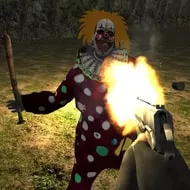
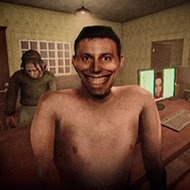
None of Zoonomaly’s monsters can be killed outright, so every encounter is built around avoidance rather than combat. Smile Cat, the game’s most recognizable creature, stalks with a fixed, unsettling grin that’s become the image most players associate with the whole game. Monster Giraffe keeps its neck lowered instead of raised the way a real giraffe would, and Monster Elephant’s toothy, noseless face is usually the jumpscare newer players screenshot first.
- Smile Cat, an aggressive feline stalker and the zoo’s signature threat
- Monster Giraffe, patrolling with an unnaturally lowered neck
- Monster Elephant, noseless and heavily toothed
- Monster Monkey, aggressive and vocal like a chimpanzee
- Stick Spider, an ambush threat in tighter corridors
Not every animal wants you dead. Friendly Ostrich, Friendly Cow, and Friendly Frog wander several enclosures without ever chasing you, and telling them apart from aggressive lookalikes at a glance is a skill you build through trial and error.
Collecting Key Shards Across Zoonomaly’s Enclosures
Twenty key shards are scattered across the zoo, each locked behind a puzzle tied to the enclosure it’s hidden in, ranging from memory challenges to spatial logic. Completionist players clear enclosures fully before moving on, while speed-focused players skip to enclosures known for easier puzzles and circle back later. By the time you’ve gathered enough shards to sense the master key coming together, later enclosures noticeably ramp up how many aggressive creatures patrol at once.
That escalation, more than any single jumpscare, is what most returning players remember about the back half of a run.
What Zoonomaly Players Keep Asking
- How many key shards do you need to collect in Zoonomaly? The zoo hides twenty key shards, each guarded by a puzzle inside a specific enclosure, and all of them are needed to assemble the master key that unlocks the outbreak’s source.
- Can you fight back against the monsters in Zoonomaly? No, none of the creatures can be killed. The Bloom O’Bang only stuns or repels a pursuer like Smile Cat or Monster Giraffe long enough to break line of sight and escape.
- What does the Bloom O’Bang actually do? It fires a burst of light that pushes back nearby threats and briefly reveals the invisible aura spectrum around monsters and hidden items, running on light bulbs collected around the zoo.
Zoonomaly stays tense less because of one monster and more because Smile Cat, Monster Giraffe, and the rest are always somewhere in that zoo while you chase the next key shard, and running out of light bulbs at the wrong moment is still the fastest way to end a run.