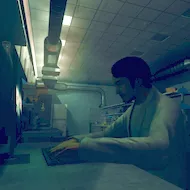
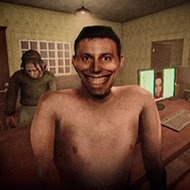
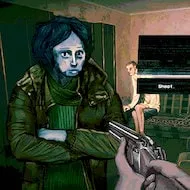
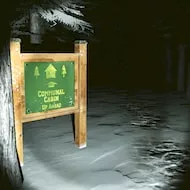
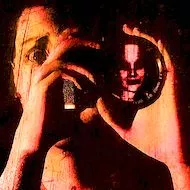
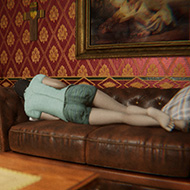
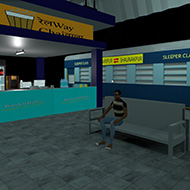
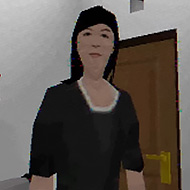
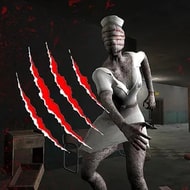
You’ve just closed the shutters on your third order of the day when the doorbell chimes again, and this time the customer standing at the counter doesn’t quite blink the way the last one did. This is the rhythm of Photomaly: routine photography work interrupted by details that don’t sit right, and the growing suspicion that ignoring them is not actually an option. The game hands you a camera, a darkroom, and a family business, then slowly makes clear that none of those things are as simple as they look.
| Genre |
PSX-style first-person horror, simulation |
| Perspective |
First-person |
| Story length |
Six days per playthrough |
| Session length |
Roughly 1.5 to 2 hours for one story run |
| Endings |
Two documented: Family Matters and Reset Protocol |
Running the Studio You Inherited in Photomaly
The premise is deceptively plain. You’ve taken over the photography studio your father left behind, and your job is to keep it running: greet customers, take their photos, process the film, and hand over finished prints. Photomaly treats this job seriously. There’s no shortcut version of the workflow — you actually read each order, actually frame each shot, and actually walk the envelope to the counter. That structure is what makes the horror land later, because the game never breaks the illusion that you’re doing ordinary work.
Orders arrive through a tracker on the right side of the screen, and it lists exactly what the customer wants: orientation, print size, copy count, color or black-and-white. Miss one field and the delivery doesn’t go through cleanly. Early customers are forgiving about pacing but not about accuracy, so the first habit worth building is reading the tracker twice before touching a single setting.
Film orders complicate things further. Instead of printing straight from the studio computer, you run the roll through developer, stop bath, and fixer, then hang each print on the drying line and wait for its marker to turn from white to green. Pull a print too early and it isn’t ready; leave the darkroom altogether and you’ll come back to a backlog. The pacing rewards players who treat the darkroom like a real chemical process, not a queue to be spammed through.
What Beginners Get Wrong in Photomaly
The single most common stumble shows up on an early order labeled Film Prints, Output: color, Frames: 4. New players see “Frames” and reach for the decorative wall frames sold for studio upgrades, assuming the order wants framed photography rather than loose prints. It doesn’t. “Frames” here means four developed prints, packed together in one envelope. Slot a customer’s photo into a decorative frame by mistake and it stays trapped there — the frame can be pulled off the wall, but the photo inside doesn’t come back out for that delivery.
The second beginner mistake is composition-related. The camera won’t accept a photo until a small green indicator appears in the upper-right corner of the viewfinder, confirming the framing matches what was requested. Players who fire the shutter the moment something looks roughly correct end up wasting film and time re-shooting. Wait for the green light, every time, even when a customer seems impatient.
A third habit worth mentioning: don’t leave equipment running while you wander off to explore the studio’s stranger corners. Photomaly rewards curiosity, but customer patience and drying prints don’t pause while you’re investigating something in another room.
How Difficulty Shifts Once the Studio Grows Familiar
Early in the game, orders are simple and the studio feels almost cozy — a straightforward job-sim with a slightly eerie soundtrack. That changes once you start noticing that not every customer behaves the way a customer should. By the time you reach the studio’s back rooms and the game introduces its Backrooms sequence, the tone has fully shifted from management sim to survival horror, and the tasks you’ve been doing on autopilot suddenly carry real risk.
Later days also stack more film orders per shift, which means darkroom timing becomes a genuine skill rather than a formality. A player who’s been sloppy about developer and fixer times on Day 2 will feel that sloppiness catch up during Day 4 or Day 5, when the queue gets longer and the unsettling interruptions get more frequent.
- Horror-focused players tend to fixate on environmental details and jump-scare timing rather than order accuracy
- Completionist players chase every achievement, including the hidden ones tied to specific darkroom outcomes
- Sim-management players naturally gravitate toward optimizing the order-to-delivery pipeline first, then deal with the scares as they come
The Backrooms Route and Call for Help
One of the game’s tensest stretches involves a camera-based route through a Backrooms-style space, paired with a sequence the community refers to as Call for Help. Both require attentiveness to details the studio work has already trained you to notice — reading the environment, matching what the game expects, and not panicking when something looks wrong. A mannequin that shouldn’t move becomes a genuine threat here, and players who treat it like set dressing tend to pay for that assumption.
This is also where the game asks the most of its audience in terms of composure. There’s a temptation to rush once the atmosphere shifts, but the same patience that served you in the darkroom — waiting for the right marker, matching the right setting — still applies. Players who slow down tend to get through cleaner than players who sprint.
Family Matters, Reset Protocol, and the Day 6 Decision
Photomaly’s story reaches its payoff on Day 6, where the accumulated choices and discoveries from earlier days funnel into one of two documented endings: Family Matters and Reset Protocol. Neither is presented as an obviously correct outcome, and the community still debates exactly which earlier actions weight the split toward one ending or the other. What’s clear is that the game wants you to have been paying attention the whole time, not just on the final day.
This is the part of Photomaly that divides players. Some find the ambiguity satisfying, a horror game trusting its audience to piece things together. Others, judging by discussion boards, wanted firmer confirmation of what the pixel-faced agent and the wider organization behind the studio actually represent. Both reactions are fair — the game leaves real gaps.
Photomaly FAQ
What does Frames 4 mean on a Photomaly order?
It refers to four developed prints that need to go into one envelope together, not four decorative wall frames. Confusing the two is the most common early mistake, and using a wall frame on a customer’s photo can leave it unrecoverable for that order.
How many endings does Photomaly have?
There are two publicly documented endings, Family Matters and Reset Protocol, both reached through the Day 6 decision point after a full six-day run.
How long does one Photomaly playthrough take?
A single story run across all six days generally runs about an hour and a half to two hours, depending on how carefully you handle each day’s orders and how much time you spend investigating anomalies along the way.
Photomaly earns its reputation less from any single scare and more from how thoroughly it commits to the studio routine before pulling it apart — the drying rack, the envelope handoff, the green acceptance indicator all become second nature right up until the moment they don’t feel safe anymore. Whether you land on Family Matters or Reset Protocol, what stays with you afterward is that photo booth camera and the quiet certainty that not every customer deserved to be photographed.