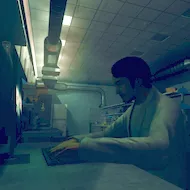
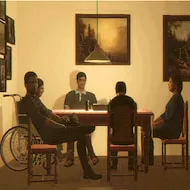
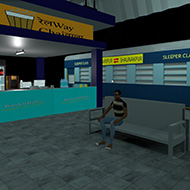
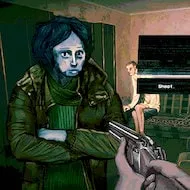
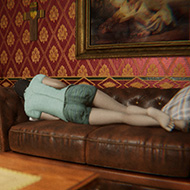
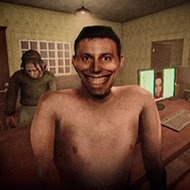
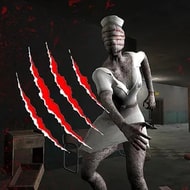
Railway Chai Wala looks like a quiet cooking sim on the surface, but it plays like something that’s quietly watching you back the longer you stay at the stall.
| Genre |
Casual Simulation / Psychological Thriller |
| Setting |
Fakripur railway station |
| Platform |
PC |
| Protagonist |
Ramu |
The opening pitch is disarmingly small: brew chai, fry a samosa, hand a bottle of Kokila Cola to a tired traveler. Ramu runs a modest stall at the edge of Fakripur station, and for a good stretch of the early game, that’s genuinely all there is to it.
The Daily Rhythm of Serving Passengers at Fakripur Station
Every shift opens the same practical way — crack the gas valve, wait for the flame to catch, and get the first pan of milk heating while a loudspeaker somewhere on the platform announces a train that hasn’t arrived yet. That small delay between announcement and arrival becomes a quiet source of tension the longer a player pays attention to it.
Orders come in waves rather than a steady trickle, tied loosely to which trains are pulling in and how many passengers spill onto the platform at once. A player who falls behind during a busy wave notices customers growing visibly impatient, which pushes toward faster, less careful preparation — and less careful preparation shows in the quality of what Ramu hands over.
Players who approach the game purely as a time-management challenge tend to optimize their movements around the stall fast, while players drawn in for the story slow down deliberately, treating the cooking as a backdrop rather than the point.
Chai, Samosas, Vada Pav, and Kokila Cola
- Chai and coffee both require timing the boil correctly — pull too early and the flavor reads as weak, wait too long and the reaction from passengers turns visibly sour.
- Samosas and vada pav run on short, timed cooking windows, meaning a distracted player can easily burn an order while handling something else at the counter.
- Kokila Cola needs no preparation at all, served straight from the cooler, but it’s requested often enough by certain recurring faces that its simplicity almost feels like a red herring next to everything else on the menu.
None of these tasks are individually difficult, and Railway Chai Wala doesn’t seem interested in making them difficult. The challenge, such as it is, comes from sustaining attentiveness across a shift that keeps introducing small distractions.
The Regulars Who Keep Coming Back to the Same Stall
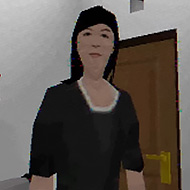
Fakripur station is populated with a rotating cast of travelers, but a specific handful reappear across shifts often enough to become genuinely recognizable. Their dialogue isn’t static — it shifts slightly with each return visit, and those shifts are where a lot of the game’s actual storytelling lives, tucked into what looks at first like idle small talk over a cup of chai.
A player who’s only tracking orders will miss most of this. A player who’s actually listening starts noticing that certain regulars appear at oddly consistent intervals, and that their behavior lines up with things happening elsewhere on the platform that Ramu himself never comments on directly. What starts as background chatter about someone ordering Kokila Cola for the third time in a week ends up carrying more weight than it should by the time later shifts roll around.
How the Cooking Loop Quietly Changes Shape
Early in the game, brewing and serving feel almost meditative, and that calm is deliberate — it establishes a baseline so the player has something to notice deviating from later. By the time a player reaches the later shifts at the stall, the platform itself starts behaving slightly differently, and Railway Chai Wala never flags this with a cutscene or a warning. It expects the player to catch the shift on their own, the same way they’d notice a regular’s dialogue changing.
Community discussion around the game tends to split along a fairly predictable line — does a cooking sim have any business trying to carry a horror story, and does Railway Chai Wala actually pull it off, or is the tension too gentle to register for players expecting something more aggressive? There’s no consensus, and reviews mentioning the pacing tend to land on opposite sides of that question depending entirely on what the player walked in expecting. Whether it’s worth the ask depends on the same thing this whole page is trying to answer for someone who hasn’t started yet: are you here for the samosas, or for what’s underneath them?
By the time the last shift wraps and Ramu’s kettle finally goes quiet, Railway Chai Wala has spent its entire runtime training you to notice small things — a regular’s face, a delayed train, a stall that’s a little too calm — and it’s that accumulated attention, more than any single scare, that makes Fakripur station stick with players long after the final cup of chai is served.