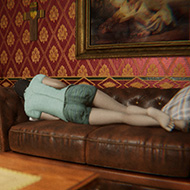
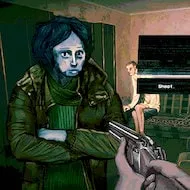
You walk through the front door after school, drop your bag by the stairs, and scan the living room out of habit before you even take your shoes off. Something about the couch cushions feels wrong, but you can’t place it yet. This is the rhythm That’s Not My Mom! trains into you almost immediately: come home, look carefully, and trust your memory of what was there yesterday.
| Genre |
First-person psychological horror |
| Core Mechanic |
Anomaly detection across repeated house visits |
| Setting |
A single suburban house, revisited across school days |
| Central Threat |
An impostor posing as the boy’s mother |
The House as a Memory Test in That’s Not My Mom!
The premise is simple to explain and much harder to execute. You play as a young boy who comes home from school day after day, and each time, the house has changed in some small way. A picture frame might be missing from the hallway wall. A vase that always sat by the window could be duplicated on the other side of the room. The game never highlights what’s different, so the entire experience rests on how well you memorized the house the first time you saw it.
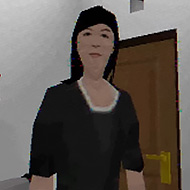
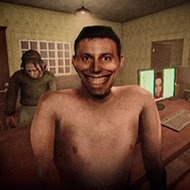
What makes That’s Not My Mom! stand out from other anomaly games is how it uses the mother figure herself as the biggest variable. She isn’t a static NPC standing in the kitchen. Her position changes, her posture shifts, and in later days her appearance can distort into something clearly not human anymore. Spotting these changes requires the same attentiveness a puzzle player brings to a hidden object scene, but the horror context makes every glance feel like it has consequences.
Beginners consistently make the same mistake early on: they check the obvious rooms first and skip the smaller connecting spaces like hallways and stairwells. Anomalies frequently hide in these transitional areas precisely because players rush through them to reach the living room or kitchen. Slowing down during the walk between rooms catches far more anomalies than a fast sweep of the main spaces.
Reading the Mother Figure in That’s Not My Mom!
By the time you reach the third or fourth day, the game stops relying purely on background details and starts testing your read on the mother figure directly. Her voice, the angle of her head, how long she holds eye contact — these become the anomaly instead of a missing painting. This shift catches a lot of players off guard because it moves the horror from environmental to personal in a way that feels deliberate rather than random.
- Static environmental changes: furniture position, missing or duplicated objects, altered picture contents
- Behavioral shifts: unnatural movement, delayed responses, repeated phrases
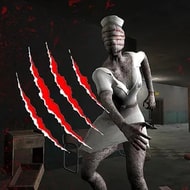
- Physical distortion: later-day encounters where the mother figure’s appearance breaks from human proportions
One detail that only clicks once you’ve actually played through several days is how the house’s silence does more work than any jump scare. There’s no ambient music pushing you toward tension, so a single footstep or a door left ajar registers immediately. Players in the anomaly-hunting community often bring up this exact moment — the first time a completely quiet room makes them freeze before they’ve even confirmed something is wrong.
Community Vocabulary and Difficulty Curve
Players discussing That’s Not My Mom! tend to describe their runs in terms of “clean days” versus “missed days,” referring to whether they caught every anomaly before moving on. This anomaly-hunting terminology, borrowed loosely from similar spot-the-difference horror titles, has become the shorthand for tracking personal performance since the game doesn’t offer a formal scoring system.
Difficulty scales less through added complexity and more through subtlety. Early anomalies are large and easy to spot once you know to look — an entire missing wall decoration, for instance. Later ones shrink down to single-object details, like the count of items in a bowl or the direction a photograph is facing. This design keeps the core mechanic in game unchanged while quietly raising the attention required to succeed.
Something the horror community discusses openly is that the game isn’t consistently terrifying in a jump-scare sense, and that’s intentional but also divisive. Some players wanted more aggressive scares given the setup, while others appreciate that the tension comes from doubt rather than shock. Both camps agree the atmosphere holds up even when the scares are sparse.
What happens if you approach the mother figure without confirming an anomaly?
Interacting with her when you haven’t correctly identified whether she’s safe can trigger one of the game’s failure states, since the core loop depends on committing to a judgment before proceeding. The consequence varies depending on the day and what specific anomaly is present.
Does That’s Not My Mom! explain what’s causing the anomalies?
The game gradually reveals that the anomaly outbreak isn’t isolated to one house, tying the boy’s experience to a wider event spreading through the city, though it favors implication over direct exposition throughout most of the runtime.
Can you replay individual days to catch anomalies you missed?
Yes, and doing so is common practice among players trying to see the full range of anomaly variations, since repeated attempts can surface different environmental changes than your first playthrough did.
What sticks with most people after finishing is not any single scare but the accumulated unease of learning a place you thought you knew. That’s Not My Mom! turns a familiar house into something you have to re-examine every single time you step through the door, and the moment you finally catch the mother figure mid-change is the moment the whole game clicks into place.