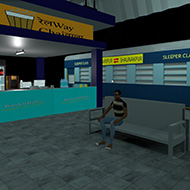
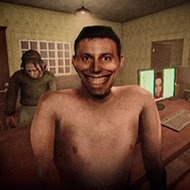
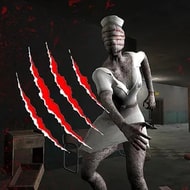
Pikabuu: STOP looks, at a glance, like it might be a lighthearted family sim with a cartoonish mascot name — but it plays like a slow, deliberate account of a household falling apart one bad decision at a time. There’s no monster chasing you through hallways here. The dread comes from watching Beni make a choice you can see going wrong, and realizing the game isn’t going to let you take it back.
| Genre |
Psychological horror visual novel, interactive fiction |
| Perspective |
First-person, story-driven |
| Core cast |
Beni, Nadia, and Kaila |
| Endings |
Six total: two good, four bad |
| Content notes |
Domestic violence with visible injuries, gambling and financial ruin |
Beni’s Household at the Center of Pikabuu: STOP
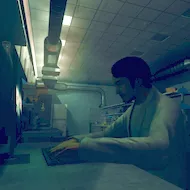
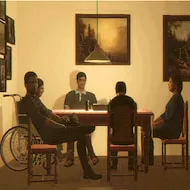
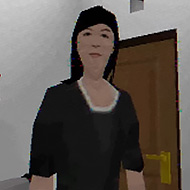
The setup is small on purpose. Beni is a husband and father who’s kept his family afloat on simple contentment rather than any real financial cushion, and the game spends its opening stretch establishing exactly how ordinary that life looks before it destabilizes. Nadia and Kaila aren’t background characters — the game is built around how each of Beni’s decisions lands on them specifically, not on some abstract “family meter.”
Early on, Pikabuu: STOP offers very little in the way of interactivity. You mostly walk through scenes, read dialogue, and absorb the texture of a household that’s stretched thin but functional. That quiet stretch matters, because it’s the baseline the rest of the game measures against once things start to slide.
The Gambling Decision That Reroutes Pikabuu: STOP
The pivot point is a decision around online gambling, framed initially as a quick way to cover a shortfall. Reject it, and the game moves toward one of its good endings without much further interference. Accept it, and Pikabuu: STOP stops asking permission — once Beni starts gambling, the player loses control over most of his subsequent choices, and the story steers hard toward its darker branches.
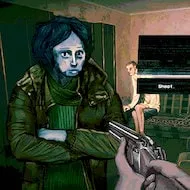
What follows involves predatory loans and an online casino site that, per the community’s documented playthroughs, turns out to be rigged against withdrawal entirely. It’s a blunt but effective piece of design: the game wants you to feel the trap closing the same way Beni does, without the safety net of full player agency.
Players researching the game’s structure before diving in often land on one specific question first: what actually triggers the worse outcomes. The honest answer is that the initial gambling decision is the fork, but how Beni handles the debt collector and how Nadia responds afterward both continue to shape which of the four bad endings you land on.
Timed Choices and the Button-Mashing Sequences
Once the story shifts into crisis mode, Pikabuu: STOP introduces short, precisely-timed button-mashing challenges layered on top of its dialogue choices. These aren’t puzzle mechanics in any traditional sense — they’re closer to physical tension made mechanical, forcing your hands to hurry through a moment your reading brain would rather slow down and think about. It’s a divisive choice among players; some find it an effective way to simulate panic, others feel it interrupts the narrative pacing right when the writing is landing hardest.
Story-focused players tend to describe these sequences as the game’s weakest link mechanically, even while praising the writing around them. Horror fans, by contrast, often point to the same sequences as the moments that made the tension feel physically real rather than just narratively implied.
Six Endings, Two of Them Worth Reaching
Pikabuu: STOP tracks toward six documented endings — two good, four bad — depending on choices made across the gambling arc and its aftermath. The bad endings escalate in severity depending on how Nadia responds to what happens at home and how Beni handles mounting debt once the loan shark gets involved; one of the more brutal documented outcomes has Beni completely isolated, having sold off his possessions and more, with nothing left to fall back on.
This is the game’s most talked-about design decision, and not everyone agrees it works. The narrative gives you very few branching moments overall, concentrating almost all of the player’s real agency into that single early choice about the loan. Some players find that restraint honest — real financial spirals often do hinge on one decision — while others wanted more opportunities to steer things back before the point of no return.
Reading the Small Details Before the Big Choice
Because Pikabuu: STOP telegraphs relatively little before its pivotal moment, attentive players tend to replay the opening stretch once they understand where the story is headed, looking for the small domestic tells the game plants early — a strained conversation, a bill left unopened, a look between Nadia and Beni that reads differently the second time through. None of it changes the mechanical outcome, but it reframes the ending you already reached.
Players curious about how long a full run takes should expect something closer to a single focused sitting than a sprawling campaign; the game is built for one concentrated pass through Beni’s story rather than the kind of open-ended pacing longer visual novels use.
Pikabuu: STOP earns its discomfort honestly, refusing to soften what happens once Beni’s household starts unraveling, and that refusal is exactly why the ending you land on — Family intact or Beni utterly alone — tends to stay with players well after the credits roll. Whether Nadia stays or leaves, the game never lets you forget it was that first gambling decision that set everything in motion.