What actually happens if you point your camera at nothing but crickets? It’s one of the first things curious players test in We Become What We Behold, and the answer says a lot about how the whole game works: nothing happens at all, because crickets aren’t news. That small joke is also the game’s thesis statement, delivered before you’ve even met the Squares and Circles whose fate you’re about to shape.
| Genre |
Browser point-and-click, social commentary |
| Perspective |
Top-down, single fixed scene |
| Playtime |
About five minutes per run |
| Controls |
Camera drag and click |
| Structure |
Single narrative arc with variable headline order |
The Camera Is the Only Tool in We Become What We Behold
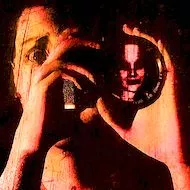
There’s no movement key, no inventory, no dialogue tree. You drag a camera frame around a small plaza where Squares and Circles go about their day, and when a moment looks worth capturing, you click. The photo you take gets broadcast on a central screen visible to every character in the scene, and from that point on, the crowd starts behaving like the photo told them to. Photograph a peaceful moment and the plaza stays mostly calm. Photograph conflict, even something small, and the plaza starts performing conflict back at you.
This is where the game earns its name. What you behold — what you choose to frame and click on — becomes what the Squares and Circles become. It’s not subtle once you notice it, but the first minute or two plays it straight enough that the mechanic sneaks up on you.
The community shorthand for this feedback loop is simply “the loop,” and it comes up constantly in discussions of the game: an interaction escalates, gets photographed, gets broadcast, and comes back louder next cycle.
What New Players Miss About the We Become What We Behold Feedback Loop
The most common mistake is treating the camera like a passive recording device instead of an active one. Newcomers often photograph whatever’s nearest or most visually interesting without registering that the choice itself changes the plaza’s mood going forward. By the time they realize the crowd is reacting to their own picks, several cycles have already compounded, and calm is much harder to reach than it was in the opening minute.
Selective attention is the mechanic underneath all of this — the game doesn’t script escalation directly, it scripts a crowd that mimics whatever gets the spotlight, and repeated attention on the same kind of moment is what builds the pattern. A single angry photo rarely does much on its own; it’s the pattern across several photos that pushes things toward conflict.
Once the ex-grouch character appears partway through the plaza’s timeline, players sometimes miss the redeeming moment entirely because their attention is locked on louder characters elsewhere in the frame. It’s a small, deliberate detail — the game rewarding a player who looks past the obvious shot.
Escalation, Fashion Trends, and the Turn Toward Conflict
By the middle stretch, the plaza has usually developed at least one trend, whether that’s a fashion phase sparked by a photographed hat or a rivalry that started as a minor misunderstanding between a Square and a Circle. Once tension crosses a certain point in We Become What We Behold, the game stops offering the calmer options it started with; scenes that were rare early on become the dominant available shots, and gentler interactions stop appearing as often.
This is the part players and educators discuss most, since the game is frequently used in classrooms as a short, hands-on example of how media attention amplifies whatever it repeatedly covers. Media-literacy instructors tend to replay specific cycles to show students the exact photo that tipped a scene from tense to hostile.
We Become What We Behold FAQ
- What happens if you only photograph crickets in We Become What We Behold? Nothing changes in the plaza. Crickets are the game’s built-in null option, a way of showing that not every framed moment counts as newsworthy, and that choosing to broadcast nothing is itself a choice available to the player.
- How many endings does We Become What We Behold have? The game follows one narrative arc rather than branching into separate endings, but the specific sequence of photos you take affects the pacing and the exact headlines shown along the way, so no two runs read identically even though they converge on the same conclusion.
- How long does We Become What We Behold take to finish? A full run lasts about five minutes, which is short enough that most players replay it at least once to test how differently the plaza reacts when they favor calmer shots over conflict.
We Become What We Behold doesn’t need more than a camera and a plaza full of Squares and Circles to make its point, and that restraint is exactly why the ending — however you got there — tends to sit with players longer than a five-minute game has any right to. Watch the ex-grouch skip past the crowd one more time and it’s hard not to wonder what you would have photographed instead.