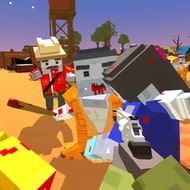
In Zombie Siege Outbreak you start behind a single barricade with a starter pistol and a limited ammo count, and that opening scarcity matters more than it looks like it should. The premise is simple on paper: a viral outbreak has turned most of the population into infected attackers, and you’re one of the few survivors left to hold the line at a series of safe zones before the horde overruns them.
The core mechanic in Zombie Siege Outbreak is straightforward wave defense: each level throws a fixed number of zombie waves at your position, and you clear the level by surviving them all with the base still standing. There are ten locations total that need protecting, and each one plays like a small siege rather than an open map to explore. You’re not wandering off to loot or hunt for lore drops. You’re planted at a chokepoint, and the game expects you to treat every wave as its own short fight.
Weapon Progression and Currency in Zombie Siege Outbreak
Every zombie you drop pays out coins, and those coins are the entire economy of the game. There’s no crafting system, no hidden currency sink, just a straightforward buy-and-upgrade loop between waves. Early on you’re stuck cycling the starter pistol because upgrades are locked behind coin totals you haven’t hit yet, and that gap is where a lot of new players get frustrated and start spraying ammo they don’t have to spare.
Once you’ve banked enough coins, better guns open up, along with grenades and a flamethrower for crowd control on the denser waves. The flamethrower in particular becomes a community favorite once players reach the mid-game locations, since it clears tightly packed zombies faster than a headshot chain ever could. Casual players tend to grab the first upgrade they can afford, while players optimizing for score tend to save coins for the flamethrower or grenades instead, since those tools scale better against the larger waves later on.
Ammo discipline is the other half of this loop. The game doesn’t hand you infinite bullets, so firing wildly at every zombie on screen drains your reserve before a wave even peaks. Reload timing between wave surges is something experienced players lean on hard, since getting caught reloading mid-rush is one of the fastest ways to lose a base.
Zombie Behavior and Difficulty Scaling
Difficulty in Zombie Siege Outbreak doesn’t ramp gently. The first couple of waves are close to a tutorial, slow zombies approaching in small numbers so you can get a feel for aiming and reloading. By the time you reach the later defended locations, wave density spikes noticeably, and the mix of enemy types forces you to actually prioritize targets instead of just holding the trigger.
- Slow shamblers that soak damage but pose little threat alone
- Faster runners that close distance quickly and punish hesitation
- Tougher zombies that need multiple hits or a headshot to drop fast
Headshots are the single biggest skill lever in the game. A body shot might take two or three hits on a tougher zombie, while a clean headshot drops most types in one. Players who ignore this and just aim center-mass tend to run out of ammo well before the wave count clears, which is the most common failure point reported across player discussions of the game.
Player Customization and Base Selection
Zombie Siege Outbreak lets you pick from a handful of playable survivors before you commit to a location, each with a slightly different look rather than a hard stat split. It’s a small feature, but it matters for players who care about presentation as much as performance, and switching characters between attempts is a common habit among players replaying earlier locations for a better score.
The ten locations aren’t identical either. Some are tighter, corridor-style chokepoints where a shotgun-style spray works fine, while others open up enough that zombies can approach from multiple angles, which is where grenades earn their keep. Recognizing which location favors which loadout is something players only really learn by losing a run first.
What Players Debate About Zombie Siege Outbreak
The most common criticism leveled at the game is that the later waves lean heavily on sheer zombie count rather than smarter enemy behavior, which some players find repetitive by the eighth or ninth defended zone. It’s a fair point, and it’s the kind of thing that shows up regularly whenever the game gets discussed. That said, the core shooting loop stays satisfying enough on its own that most players push through anyway, especially once better weapons are unlocked.
What happens when you run out of ammo mid-wave in Zombie Siege Outbreak?
You’re forced into a reload or a weapon swap while zombies keep closing in, which is exactly the moment most runs fall apart. Keeping a secondary weapon or grenades in reserve for these gaps is the standard workaround experienced players rely on.
Do all ten locations in Zombie Siege Outbreak get harder in the same way?
Not exactly. Wave count and zombie speed both increase as you progress, but tighter locations emphasize aim discipline while open locations demand better use of grenades and the flamethrower to control multiple approach angles at once.
Is upgrading the starter pistol worth it early in Zombie Siege Outbreak?
Only briefly. Coins are tight in the first couple of locations, and most players find it more efficient to save toward a proper upgrade or the flamethrower rather than sinking early coins into incremental pistol tweaks.
Zombie Siege Outbreak rewards patience with ammo and a willingness to actually learn each location instead of brute-forcing it, and that’s most obvious once you’re standing at the flamethrower unlock with a wave of runners bearing down on you. It’s not a deep game, but the coin-to-upgrade loop and the ten-location structure give it more shape than most browser shooters manage, and that’s why it still gets replayed by players chasing a clean run.