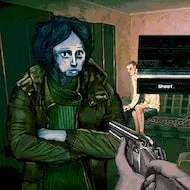
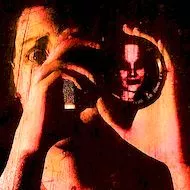
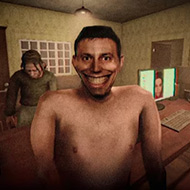
You move into your late grandmother’s house in a village so small it barely shows up on a map, and by the first snowfall something is already tapping at Olya’s window. Tiny Bunny puts you in the shoes of Anton Petrov, a twelve-year-old who has just relocated with his family to an unnamed Siberian settlement, and it wastes no time turning bedtime stories into evidence.
Anton, Olya, and the Owl at the Window
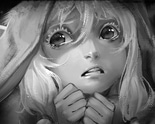
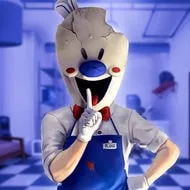
Anton’s little sister Olya is six, and she talks about the creature outside in the same flat, matter-of-fact tone kids use for describing a new toy. She calls the visitor Hooty, a person-sized figure in an owl costume who watches the house at night, and Tiny Bunny never rushes to explain whether Olya is imagining him or reporting him accurately. Missing-child posters are already nailed to fences around the village before Anton has unpacked his boxes, and the locals blame a maniac supposedly living in the forest.
Anton starts asking questions nobody wants answered, and that refusal to hand you a clean monster is what most players remember after their first sitting, more than any single scare.
Why Tiny Bunny Rewards Slow Reading
New players tend to click through dialogue the way they would in a faster visual novel, and that habit costs them here. Tiny Bunny tracks small, easy-to-miss decisions, not just the obvious branching prompts, so skimming past Anton’s inner monologue means missing setup that pays off two or three scenes later. Beginners also assume the game is building toward one big jump scare, when the tension usually sits in a look held a beat too long or a line of dialogue that doesn’t match what you just saw.
- Clicking through Olya’s dialogue instead of reading her word choice closely
- Treating early, low-stakes decisions as unimportant
- Waiting for a jump scare instead of tracking small inconsistencies
Early on, choices feel cosmetic. By the time Alisa enters wearing her fox mask, they clearly are not.
Alisa, Polina, and the Village That Watches
Polina is the one classmate willing to talk to Anton, and she becomes an anchor to normal school life even as everything around it curdles. Alisa is stranger: a girl who wears a fox mask and seems to know more about the disappearances than any adult in the village is willing to say out loud. Fans in the community still argue over Alisa’s motives across multiple playthroughs, comparing notes on forums the way people compare crime-board theories.
Players who favor Anton’s cautious lines see a different Alisa than players who push him to confront her directly, and that divergence is where Tiny Bunny’s writing is strongest.
Working Toward Tiny Bunny’s Twenty Endings
Across its five episodes, the finished game offers twenty distinct endings, with the bulk of them locked behind choices made in the fifth chapter, Bunny, Bring Me Food!. Chasing a specific ending means keeping a mental log of who Anton trusted, what he told his parents, and how he treated Olya’s stories about Hooty, since the game rarely flags a choice as important when you make it. Some players find the pacing slow compared to jump-scare horror, and that criticism comes up often in community discussions, but it’s tied directly to how the branching structure works.
One detail that only lands once you’ve actually played it: the sound design changes almost imperceptibly whenever Hooty is near, a low pressure in the mix rather than a sting, which is why so many first-time players swear the game felt wrong before anything visibly happened.
How many endings does Tiny Bunny have?
The completed game has twenty endings in total. One is reachable at the close of episode four, while the rest are earned exclusively through choices made across episode five.
Is Tiny Bunny more sad than scary?
It leans toward psychological dread and grief rather than constant jump scares, built around Anton, Olya, and the disappearances around them. Players expecting nonstop frights sometimes find the slower chapters challenging, though the atmosphere around Hooty’s appearances still unsettles most newcomers.
Who is the owl-costumed figure in Tiny Bunny?
Olya calls him Hooty, a person-sized visitor in an owl costume who watches the family’s house at night. The game deliberately keeps his nature ambiguous for long stretches, tying him to the wider mystery of the village’s missing children.
Tiny Bunny stays memorable less for Hooty’s silhouette at the window than for how long Anton, and the player, are made to sit with not knowing what he is.