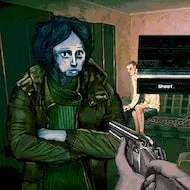
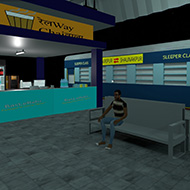
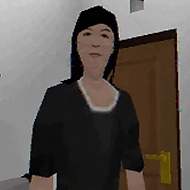
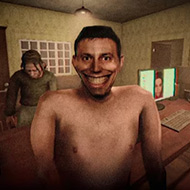
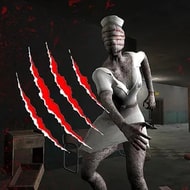
Munci has lost her children somewhere among the headstones, and the only thing standing between you and finding them is a portable radio, your own hearing, and whatever’s fast enough to catch you if you stop listening.
A Graveyard You Navigate by Ear
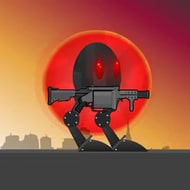
Nextbot Graveyard hands you a portable radio and asks you to trust it more than your eyes, since the fast, relentless nextbots patrolling the graveyard are often heard well before they’re seen. Munci, the figure who’s lost her children among the graves, sends you out stage by stage, and each one demands you read the radio’s signal correctly rather than just sprinting toward the nearest exit.
Within the first couple of minutes, most players realize the game punishes exactly the instinct a graveyard setting invites: running blind toward open space. Standing still and actually listening to what the radio is telling you almost always outperforms panic.
Safe Zones That Feel Safer Than They Are
Safe zones offer real protection, nextbots genuinely can’t reach you inside one, but they come at a cost that new players consistently underestimate: your radio doesn’t function properly while you’re inside, which means you lose track of where threats have repositioned themselves the moment you step back out. That tradeoff is the core tension running through every stage.
Veteran players treat safe zones as a brief reset rather than a place to camp, since lingering too long just delays a problem that’s still waiting the moment you leave. Newer players often overuse them, only to walk straight into a nextbot they’d have heard coming if they’d left with the radio active sooner.
Climbing, Grabbing, and the Half-Second That Saves You
- Grabbing onto graves or low walls to briefly break a pursuing nextbot’s line on you
- Reading radio static intensity as a rough distance gauge rather than a precise map
- Timing safe zone exits for moments the radio suggests nearby threats have moved on
- Collecting each of Munci’s five gifts across stages rather than rushing to a single finish point
The moment most players remember afterward is scrambling onto a low grave wall with a nextbot already closing the gap, losing it by a margin that felt far too narrow to have actually worked. That’s the game’s real hook: not the chase itself, but how close the escape always feels even when you’ve technically done everything right.
An Accessibility Gap Worth Acknowledging
Because so much of Nextbot Graveyard’s tension lives in audio cues, players who are hard-of-hearing are genuinely disadvantaged in a way visual-first horror games don’t usually create, and that’s a fair criticism raised often around the game rather than a minor complaint. It’s one of the more honest limitations in the current wave of nextbot-style horror titles, since the format itself leans so heavily on sound that there’s no easy visual substitute without changing the core design.
Nextbot Graveyard turns a genre often reduced to jump-scares and sprinting into something closer to a listening exercise, and it’s Munci’s five scattered gifts, collected one tense radio signal at a time, that keep players returning to a graveyard they already know is listening back.