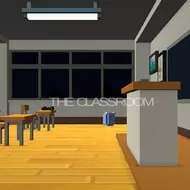
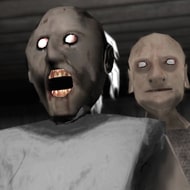
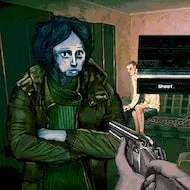
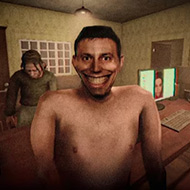
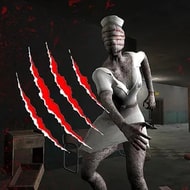
The first Granny locked you in a house with one old woman listening for your footsteps. Granny: Chapter Two locks you in a house with a sewer underneath it, five floors between you and the roof, and a second set of ears waiting in the dark.
What Granny: Chapter Two Changes About the Original House
The house itself has grown considerably. Where the first game confined you to a single structure, Granny: Chapter Two spans five floors total, from a sub-basement below the sewer up to a third floor and eventually the roof, and that extra vertical space changes how you plan routes. You can no longer treat the map as one loop to memorize; you have to think in terms of which floor holds which tool, and backtracking between floors costs far more time than it did navigating a single-story layout.
The sewer is the headline addition, and it’s not a cosmetic reskin of the basement. It’s a genuinely separate zone reachable through the house’s lower levels, with its own water hazards, its own item spawns, and its own resident threat that has nothing to do with Granny or Grandpa directly.
Veterans of the original game often say the first few minutes feel familiar right up until they find the stairs down into the sewer deck, at which point Granny: Chapter Two stops being a bigger version of the same house and starts being its own thing.
Grandpa’s Hearing Problem, and Why It Doesn’t Save You
Grandpa is the game’s second antagonist, and his defining trait is that he doesn’t hear nearly as well as Granny does. That sounds like an advantage, and early on it genuinely is one — you can get away with more noise near him than you ever could near Granny. The catch is that when Grandpa does notice you, he hits far harder, and players who get overconfident around him tend to lose a full day from a single mistake they wouldn’t have made near Granny.
The two of them patrol independently, which means a route that’s safe from Granny can walk you directly into Grandpa, and vice versa.
Balancing awareness of both patrols at once is the single biggest skill jump from the original Granny, where players only ever had to track one threat’s position in their head.
Five Floors, From the Sub-Basement to the Roof
The sub-basement holds a workbench, storage shelves, and a locked wooden box that needs a Crowbar to open, while the ground and upper floors scatter tools like the Screwdriver, a hand wheel for the spindle mechanism, and assorted keys behind panels you often can’t reach without the right item first. A white panel tucked under a staircase is a common early find, but it requires the Screwdriver before it gives up whatever it’s hiding.
Higher floors introduce their own hazards, and by the time you’re navigating the upper levels, the game expects you to already understand Grandpa’s patrol timing well enough to slip past him near tight stairwells.
The roof, once you reach it, is where one of the game’s escape routes concludes, which makes vertical progress feel purposeful rather than like padding added just to make the house feel bigger.
Slendrina’s Child and the Ghost You Don’t Want to Wake
- A sleeping infant found in the Backyard area, easy to overlook on a first playthrough
- A ghostly appearance from Slendrina herself if that child is knocked out using the Shotgun, Stun Gun, or a Hand Grenade
- Roughly forty seconds of Slendrina hovering and screaming above the child’s body before she vanishes again
- No direct danger from Slendrina during this sequence, despite how alarming it looks
Slendrina doesn’t attack you during this event, but the sudden scream and her floating presence are enough to make most players panic and make noise anyway, which then draws Granny or Grandpa straight to your location. It’s one of the clearest examples in the game of a scripted moment being more dangerous for what it causes you to do than for what it actually threatens.
Most players stumble into this the first time entirely by accident, and the community generally agrees it’s one of the most memorable jump moments in the whole game specifically because it’s optional and unexplained.
The Boat Route Through the Sewer Deck
Escaping by boat requires gathering a boat key, a gasoline can, a spark plug, a padlock key, and a boat handle before you can start the old rusty boat docked in the sewer and open the gate blocking it. It’s the most item-intensive of the escape routes, but it also lets you avoid a huge portion of the house’s upper floors entirely once you’ve committed to it.
The Water Monster living in the sewer’s flooded sections is the real cost of this route. Stepping into deep water without knowing where it patrols is one of the fastest ways to lose a day in the entire game.
Some players deliberately drop an item into the water from the Backyard, letting it wash back out near the Sewer Deck pipe, using the resulting sound to lure Granny or Grandpa away from a choke point — a trick that works on Grandpa too if the item happens to be the Vase.
Front Door, Boat, or Helicopter: Granny: Chapter Two’s Three Ways Out
Beyond the boat, you can still leave through the front door once you’ve cleared its locks and removed the boards blocking it with a Crowbar, which mirrors the original game’s most direct escape option. A helicopter escape from the roof rounds out the third route, giving players who’ve mapped the upper floors thoroughly an option that avoids the sewer’s water hazards entirely.
Having three viable exits changes replay strategy considerably compared to the original house, since a run that stalls out on one route can often pivot to another without starting over completely.
Most experienced players pick a preferred route before they even start a fresh run, since committing early to boat, door, or helicopter shapes which items are worth prioritizing from minute one.
Items New Players Waste in the First Two Days
New players consistently burn their first Crowbar use on a low-value wooden box instead of saving it for the boarded front door, not realizing the tool doesn’t have unlimited durability in every scenario. The Stun Gun, commonly found spawning in the kitchen microwave, gets used defensively out of panic far more often than it needs to be, when saving it for a guaranteed choke point near Grandpa is usually the stronger play.
Cautious players tend to over-explore the sub-basement early, burning time there before they’ve even located the sewer entrance that the whole level’s structure is really built around.
Speed-focused players, by contrast, often rush the boat route on a first attempt without gathering all five required items, which just means backtracking through Water Monster territory a second time.
Practice Mode, Extreme Mode, and What Veterans Argue About
Granny: Chapter Two includes a Practice Mode that lets players learn the house’s five floors without either antagonist actively hunting them, which newer players lean on heavily before attempting a real run. Extreme Mode sits at the opposite end, tightening timers and sharpening both Granny’s and Grandpa’s reactions considerably.
The community’s biggest disagreement is whether Grandpa’s introduction actually raised the difficulty or just added a second obstacle to memorize once you know his patrol logic. Some players find tracking two patrols simultaneously the hardest part of the whole game, while others argue that once you understand Grandpa only reacts to close-range noise, he becomes easier to avoid than Granny ever was.
What almost nobody disagrees on is the sewer’s Water Monster — it’s widely considered the single most punishing addition in the sequel, precisely because it removes your ability to retreat once you’re already in the water.
Who is Grandpa in Granny: Chapter Two and how is he different from Granny?
Grandpa is the game’s second antagonist, and unlike Granny, whose hearing catches almost any noise you make, Grandpa doesn’t hear well at all. The tradeoff is that when he does catch you, the encounter is far more punishing, and he patrols his own independent route through the house separate from Granny’s.
How many ways can you escape in Granny: Chapter Two?
There are three escape routes: the front door once its locks and boards are cleared, a boat through the flooded sewer requiring five separate items, and a helicopter reachable from the roof. Each route demands a different set of items and carries different risks, from Grandpa’s patrol near the upper floors to the Water Monster guarding the sewer’s deep water.
What happens if you disturb Slendrina’s Child in the Backyard?
Knocking out the sleeping infant with the Shotgun, Stun Gun, or a Hand Grenade summons Slendrina as a ghost who screams and hovers above the body for around forty seconds. She doesn’t directly harm you during this sequence, but the noise it startles out of most players tends to draw Granny or Grandpa straight to their position.
Granny: Chapter Two takes everything that made the original house tense and adds vertical floors, a flooded sewer, and Grandpa’s unpredictable hearing on top of it, and the result is a sequel that genuinely earns its extra threat rather than just recoloring the first game’s antagonist.