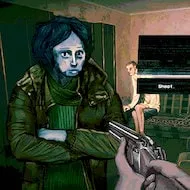
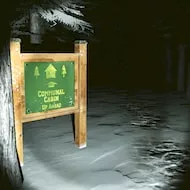
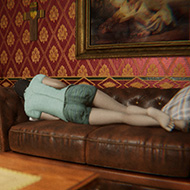
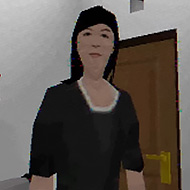
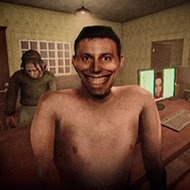
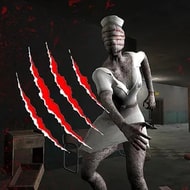
You duck behind an armchair the instant you hear it — a wet, sing-song “hee-hee” drifting out of the hallway behind you. Escape From Ayuwoki drops you into that exact moment from the first few seconds: alone in a mansion, hunted by something that used to look human, with nothing but your ears and your nerve keeping you alive.
| Genre |
Survival horror, stealth |
| Setting |
A haunted mansion with two connected floors |
| Objective |
Find the main gate key and escape |
| Main Threat |
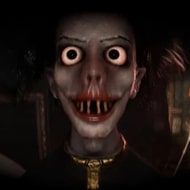
Ayuwoki, a Michael Jackson-inspired creature |
Inside the Mansion Escape From Ayuwoki Traps You In
There’s no inventory grid, no crafting menu, no combat button. The entire game is built around one loop: sneak through rooms, find the main gate key, and reach the door before Ayuwoki finds you first. Bedrooms, a basement, a long corridor connecting two separate cellars — every space is a place the key might spawn, which is why the layout changes just enough between runs that memorizing a single route doesn’t work twice.
What trips up new players almost immediately is treating this like a normal horror adventure with a list of items to collect. There isn’t one. You’re not solving puzzles so much as reading a house — which drawers creak, which hallways funnel sound, where the furniture lets you disappear. Rushing a fresh room is the single most common way players lose a run before they’ve even seen Ayuwoki up close.
Speedrunners treat the mansion completely differently from someone playing it for the first time. Where a newcomer clears a room cautiously, checking every corner, a speedrunner is already calculating which door leads toward the main gate fastest, accepting more risk because they know roughly where key spawns tend to cluster.
The Hee-Hee Cue and Why Sound Management Matters
Ayuwoki’s signature “hee-hee” — a nod to the vocal riffs the creature is built around — is the game’s actual warning system. It’s not decoration. Hearing it means Ayuwoki is close enough to have registered something, and the direction it comes from tells you roughly where he’s coming from.
This is where footsteps become a resource you manage rather than an afterthought. Walking instead of sprinting through open rooms, closing doors gently instead of slamming them, avoiding objects that clatter when knocked — all of it feeds directly into whether that hee-hee shows up thirty seconds later. Once you reach the second cellar, where the corridors narrow and sound carries further, this discipline stops being optional.
Newer players tend to associate danger only with seeing Ayuwoki on screen, which is backwards. By the time you can see him, you’ve usually already made the mistake. The real skill in Escape From Ayuwoki is reacting to what you hear before anything becomes visible.
Hiding Spots, Blind Corners, and the Crossed-Out Eye
Furniture, boxes, and the odd patch of bushes scattered through the mansion all function as hiding spots. You’ll know you’re properly concealed because a crossed-out eye icon appears on screen — the game’s way of confirming you’re actually hidden rather than just crouched somewhere that feels safe.
Blind hiding is a common early mistake. Diving under the nearest table the moment you panic often traps you in a spot Ayuwoki checks routinely, since his search pattern tends to sweep obvious furniture first. Players who’ve logged more time learn to hide in less predictable spots — a shadowed corner, a gap behind a cabinet — rather than the first thing they see.
Completionists chasing every ending in Escape From Ayuwoki spend a lot of time studying exactly this: which hiding spots are “safe” long-term versus which ones just buy a few extra seconds. It’s one of the more debated topics among players, since hiding-spot reliability can feel inconsistent depending on how alert Ayuwoki currently is.
Cassette Tapes and the Mr. Carlon Thread Behind Escape From Ayuwoki
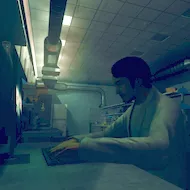
Scattered cassette recorders and a TV monitoring room hold the actual story, told entirely through things you have to go find rather than cutscenes. Piece them together and a name surfaces: Mr. Carlon, the man behind the cult responsible for what happened to the mansion’s original occupant.
None of this is required to escape. You can finish a run without listening to a single tape. But the tapes explain why Ayuwoki behaves the way it does — why chapter one is mostly about scares and surprise, why later stages feel more deliberate. Players who skip the lore entirely miss the context, but they don’t miss any mechanical advantage, and that split in how people approach the game is a genuine point of disagreement in the community.
First-time horror players usually ignore the tapes on their first run, focused purely on survival, then go back and hunt for them once they understand the mansion’s layout well enough to explore safely.
The Summoning and Why the Third Chapter Feels Different
By chapter three, Ayuwoki isn’t behaving like the creature you met in chapter one. Early on, he’s built for scares and surprise. In the second stage he shifts toward sneak attacks and faster pursuit. By the third, his attention drifts toward the rats scattered through the mansion almost as often as toward you, which changes the rhythm of how you move through late rooms.
The Summoning, the game’s follow-up chapter, picks up after the original ending and drops you into the same mansion as a different character, with new areas and a heavier, more surreal tone once the ritual sequence begins. It roughly matches the length of the base game and adds enemy variety the original never had.
- Chapter one — built around scares and disorientation
- Chapter two — Ayuwoki hunts with sharper reactions
- Chapter three — attention splits between you and the rats
How do you avoid Ayuwoki in Escape From Ayuwoki?
Stay out of open sightlines, manage your footstep noise constantly, and use real hiding spots — the ones that trigger the crossed-out eye icon — rather than the first piece of furniture you see. Listening for the hee-hee cue before Ayuwoki is visible gives you the best chance to reroute.
What happens if Ayuwoki catches you?
Getting caught ends the run immediately with a jumpscare — there’s no health bar or second chance in the moment. You restart from the mansion’s entrance, which is part of why sound discipline matters more than reflexes here.
Is there a way to fight back against Ayuwoki?
No. Escape From Ayuwoki has no combat option against Ayuwoki at any point, including in The Summoning. Evasion, hiding, and route choice are the only tools available, which is a deliberate design choice some players find refreshing and others find limiting.
What makes Escape From Ayuwoki stick with people isn’t the jumpscare itself — it’s the tension built entirely out of a hee-hee cue and a crossed-out eye icon, two small signals doing all the work a bigger horror game would hand off to combat systems. Once you’ve learned to read the mansion instead of fearing it, Mr. Carlon’s story is really just the reward for surviving long enough to look for it.