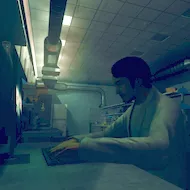
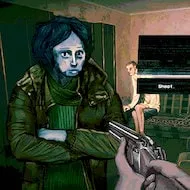
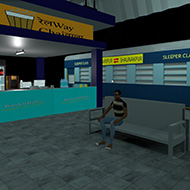
What happens when the cartoon cast you grew up with checks into a hotel that doesn’t let anyone check out? Doraemon Hotel takes Nobita and the familiar blue robotic cat and drops them into a night where the hallway lights flicker for reasons the game never explains and every door seems to lead somewhere it shouldn’t.
Nobita Wakes Up Somewhere He Shouldn’t Be
The setup strips away the gadget-driven cheerfulness fans expect from Doraemon and replaces it with a locked hotel corridor, a flashlight with a battery that never feels like enough, and a growing sense that the building itself is working against you. Nobita is the character you’re steering through the halls, and the game leans hard on the discomfort of seeing him without Doraemon’s usual pocket full of solutions.
Within the first couple of minutes, most players notice the game isn’t interested in jump-scaring you constantly. Long stretches of empty hallway are the point, since the quiet is what makes the sudden creak of a door down the corridor land as hard as it does.
Puzzles Built Around Hotel Rooms, Not Gadgets
- Locked guest rooms that need a key or code found somewhere else on the same floor
- Logic puzzles tied to objects scattered through the lobby and hallways
- Hiding spots inside closets and under furniture when footsteps get close
- Environmental clues that hint at what happened to the hotel before Nobita arrived
The puzzle design keeps things grounded in ordinary hotel objects rather than anything overtly supernatural at first glance, which makes the moments things do turn strange hit harder by contrast. Beginners tend to rush past clues stuck to walls or scrawled on room service carts, then get stuck later without the context those details would have provided.
Escalation Night by Night
Doraemon Hotel structures its threat as a series of nights, each one demanding a bit more from you than the last, whether that’s a longer stretch without a hiding spot nearby or a puzzle that requires backtracking across floors you thought you’d already cleared. Players who treat the early nights as a difficulty ceiling get caught off guard once the pace picks up.
Completionist players tend to comb every guest room for background details about the hotel’s history, while players just trying to survive the night skip straight to whatever unlocks the next door. Both approaches finish the game, but only one leaves you understanding why the halls feel the way they do.
What New Players Get Wrong About the Flashlight
The flashlight battery drains whether you’re actively using it to search a room or just holding it up out of nervous habit while standing still, and new players burn through their charge far faster than the game expects by leaving it on constantly. Learning to click it off during genuinely safe stretches of hallway is one of the first real skills the game quietly demands of you.
How is Doraemon Hotel different from the usual Doraemon cartoons?
It swaps the franchise’s gadget-solving optimism for a survival-horror structure, stripping Doraemon’s tools out of the equation and leaving Nobita to rely on stealth, puzzle logic, and a limited flashlight instead.
Do you play as Doraemon or Nobita?
You control Nobita through most of the hotel’s corridors, with Doraemon’s presence felt more through unsettling implication than direct gameplay involvement, a choice that reframes the usual dynamic between the two characters.
Is there combat in Doraemon Hotel?
No, the game is built entirely around avoidance and puzzle-solving rather than confrontation, so hiding in closets and reading environmental clues matters far more than any kind of direct fight.
Doraemon Hotel earns its unease by taking characters built for daylight comedy and stranding them somewhere the lights won’t stay on, and it’s Nobita’s flashlight clicking off in a hallway that used to feel safe that sticks with most players long after they’ve found the exit.