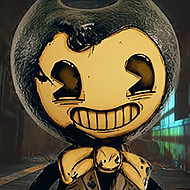
You hear the pipes groaning before you even see the sign for Joey Drew Studios again, and by the time the elevator grinds to a stop, ink is already pooling around the grates. Bendy and the Ink Factory drops you back into that flooded, rubberhose-cartoon nightmare, except this time the machinery has a new wing to explore, and the thing that used to be a cartoon mascot is still down here waiting.
Walking Back Into a Studio That Never Dried Out
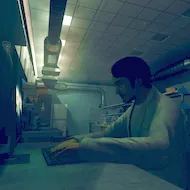
The setup feels familiar to anyone who’s spent time in the original ink-flooded halls: dim work lights, flooded corridors, and Bendy’s grinning face stenciled onto walls that have long since started dripping. What’s different in this fan-made expansion is the emphasis on factory machinery itself, with conveyor belts, ink pumps, and vats standing in for the animation desks of the earlier setting.
Within the first two minutes, most players notice the ambient hum of the ink machine never actually stops, and it’s load-bearing for the whole atmosphere. Turn the volume down and the game loses half its tension, because so much of what signals danger comes through sound rather than anything on screen. Long stretches pass with nothing chasing you at all, which is exactly what makes the moments Bendy does show up land as hard as they do.
Bendy and the Ink Factory Never Lets the Ink Machine Rest
The ink machine at the center of Joey Drew Studios lore is more than set dressing; it’s the reason the factory wing exists, cranking out the ink that floods the lower levels and, by the game’s internal logic, keeps recreating the Searchers that patrol the halls. Getting the machine running for a puzzle sequence usually means tracking down valves, gears, or fuses across several rooms, then returning to a control panel under time pressure.
Puzzles built around old machinery are where the pacing slows down on purpose. You’re rarely chased during these sequences, but the sound cues that signal Bendy’s approach don’t pause just because you’re staring at a valve diagram.
Boris, Alice Angel, and Deciding Who to Trust
Boris the Wolf shows up as the closest thing to an ally the ink factory offers, and true to the source material, he’s more useful as a distraction and companion than as combat backup. Alice Angel’s presence is felt more than seen at first, her voice and painted likeness scattered through murals and audio logs before she becomes a direct factor in the plot.
Neither character behaves like a simple ally or a simple threat, and that ambiguity is part of what the Bendy series has always leaned on. Players expecting Boris to fight alongside them the way a typical horror-game companion would are usually disappointed, and that’s one of the more common complaints in fan discussions.
Searchers, the Butcher Gang, and What Waits in the Ink
The one-eyed Searchers remain the most common threat in the flooded corridors, shambling ink creatures that react to noise and light rather than hunting with any real intelligence. The Butcher Gang enemies are a different problem: faster, more coordinated, and usually encountered in tighter factory corridors where there isn’t much room to circle around them.
- Searchers that surface from ink puddles when you linger too long in one spot
- Butcher Gang enemies that patrol in twos through the machinery halls
- Bendy himself, who appears rarely but changes the rules of a level completely when he does
What separates a bad run from a clean one comes down to whether you treat every ink puddle as a potential ambush point, since new players walk straight through standing ink without checking first, which is the single most common way a run ends early.
Bacon Soup Cans and the Objects You Can’t Skip
Collecting Bacon Soup cans is a series tradition, and this fan game keeps the habit alive as an optional objective for players chasing full completion rather than just an exit. Tape recorders scattered through the machinery halls fill in backstory the main path never explains, and skipping them is the biggest reason players finish confused about why the factory wing exists.
- Locate the tape recorder or Bacon Soup can hidden in each explorable room
- Return to a safe checkpoint before triggering the next scripted event
- Use collected audio logs to unlock context behind later puzzle sequences
Completionists get the most out of this loop, since the collectibles rarely affect survival directly but reward players who backtrack through cleared rooms just to be thorough.
Where First-Time Players Lose the Most Time
The most common early mistake is running instead of walking through rooms Bendy hasn’t entered, generating enough noise to draw Searchers when nothing was actively hunting you. A close second is ignoring tape recorders and missing hints for the later machinery puzzles. Speedrunners chasing a fast clear skip almost everything optional and pay for it in restarts, while cautious players who clear each room fully generally lose less time overall.
Where Bendy and the Ink Factory Divides Fans
Not everything lands cleanly with the community. Some players find the added factory sections drag in the middle, with backtracking through similar-looking corridors feeling tedious rather than tense, a criticism that shows up often enough in fan discussions to be worth acknowledging. The core chase sequences still land, but the connective tissue is where opinions split hardest.
Questions Players Keep Asking About the Ink Factory
How long does Bendy and the Ink Factory take to finish?
A full playthrough runs longer than a single chapter of the original Ink Machine campaign because of the added machinery puzzles, though exact time depends heavily on how many Bacon Soup cans and tape recorders you stop to collect.
Do you need to have played Bendy and the Ink Machine first?
You can follow the ink factory’s events without prior knowledge, but references to Joey Drew, Alice Angel, and the ink machine’s origin land with far more weight if you already know how the original studio’s story ended.
Is Bendy dangerous the whole time in the ink factory?
No, Bendy only appears in scripted stretches rather than patrolling constantly; most of the sustained threat comes from Searchers and the Butcher Gang, with Bendy’s appearances reserved for the moments meant to spike tension hardest.
Bendy and the Ink Factory succeeds because it trusts the same ingredients that made the original ink-flooded studio work: a mascot that shouldn’t feel unsettling but does, a building that keeps generating new threats out of its own machinery, and a slow drip of audio logs that make Joey Drew’s ambition feel like the real monster of the story.