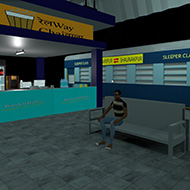
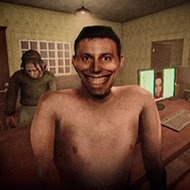
Granny 3: Return To The School immerses players in a derelict educational institution where escape hinges on stealth, memorization, and strategic foresight. The atmosphere is palpably oppressive and unpredictable, compelling cautious progression and judicious management of scarce resources. Every action carries significant consequence, with adversaries poised to swiftly punish any misstep.
Stealth Mechanics and Enemy Awareness
Survival in Granny 3: Return To The School is fundamentally rooted in its stealth systems. Player movement generates audible cues, which in turn draw hostile attention. Success demands mastering the crouch, utilizing strategic pauses, and actively listening for patrol patterns to evade detection. The game systematically rewards restraint, establishing patience as a primary survival instrument over haste.
- Sound-sensitive enemies reacting to movement
- Limited visibility increasing tension
- Hiding spots offering temporary safety
School Environment and Exploration Flow
The architectural design of the school is a central strategic component. A network of hallways, classrooms, storage rooms, and staircases forms a labyrinthine space that gradually unlocks as players discover essential tools and keys. Commuting safe routes and environmental layouts to memory becomes critical, reducing exposure during necessary backtracking and traversal.
- Locked areas requiring specific items
- Multiple floors with unique hazards
- Interactive objects affecting navigation
Puzzles, Items, and Escape Strategy
Advancement is gated by solving context-sensitive puzzles intrinsically linked to item application. Objects must be gathered, scrutinized, and employed with precision. Inefficient planning often mandates hazardous backtracking. Granny 3: Return To The School favors players who formulate a coherent escape sequence from the outset and rigorously minimize superfluous actions.
- Item-based puzzles requiring observation
- Sequential objectives building pressure
- Risk assessment influencing decisions
Player Questions and Survival Guidance
A frequent inquiry involves whether a rushed approach can expedite completion. The game’s design consistently reinforces slow, deliberate, and observational play. Acute auditory vigilance, mapping enemy patrol loops, and pre-planning each maneuver substantially elevate survival odds. Errors are framed as instructive experiences rather than arbitrary setbacks.
Granny 3: Return To The School provides a consistently tense experience built upon perceptual awareness and tactical control. Its core emphasis on acoustic cues, environmental memory, and meticulous strategy generates sustained psychological pressure, ultimately rewarding players who maintain adaptability, patience, and composure while navigating the school’s treacherous confines.